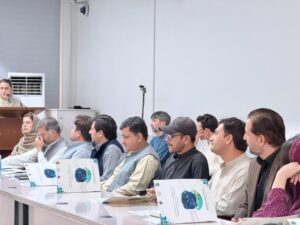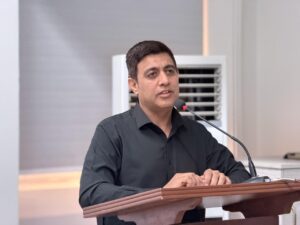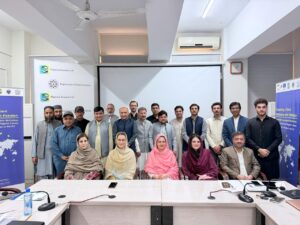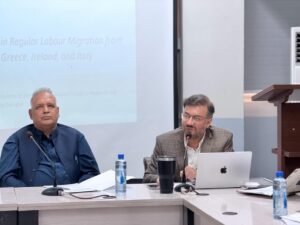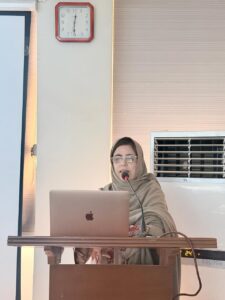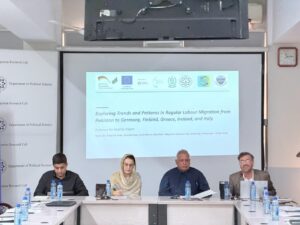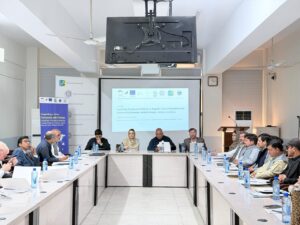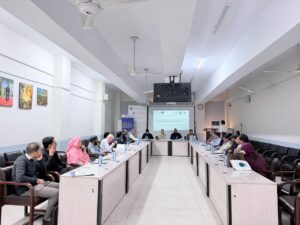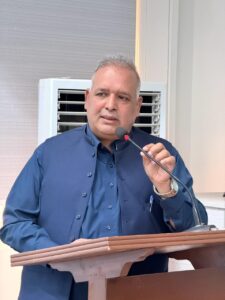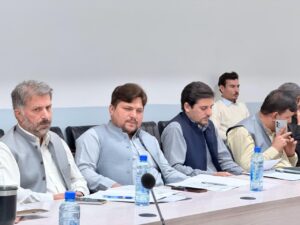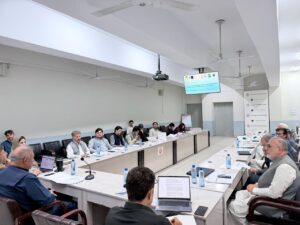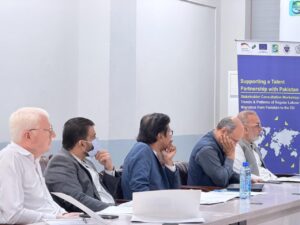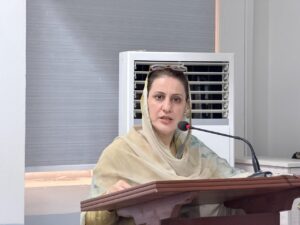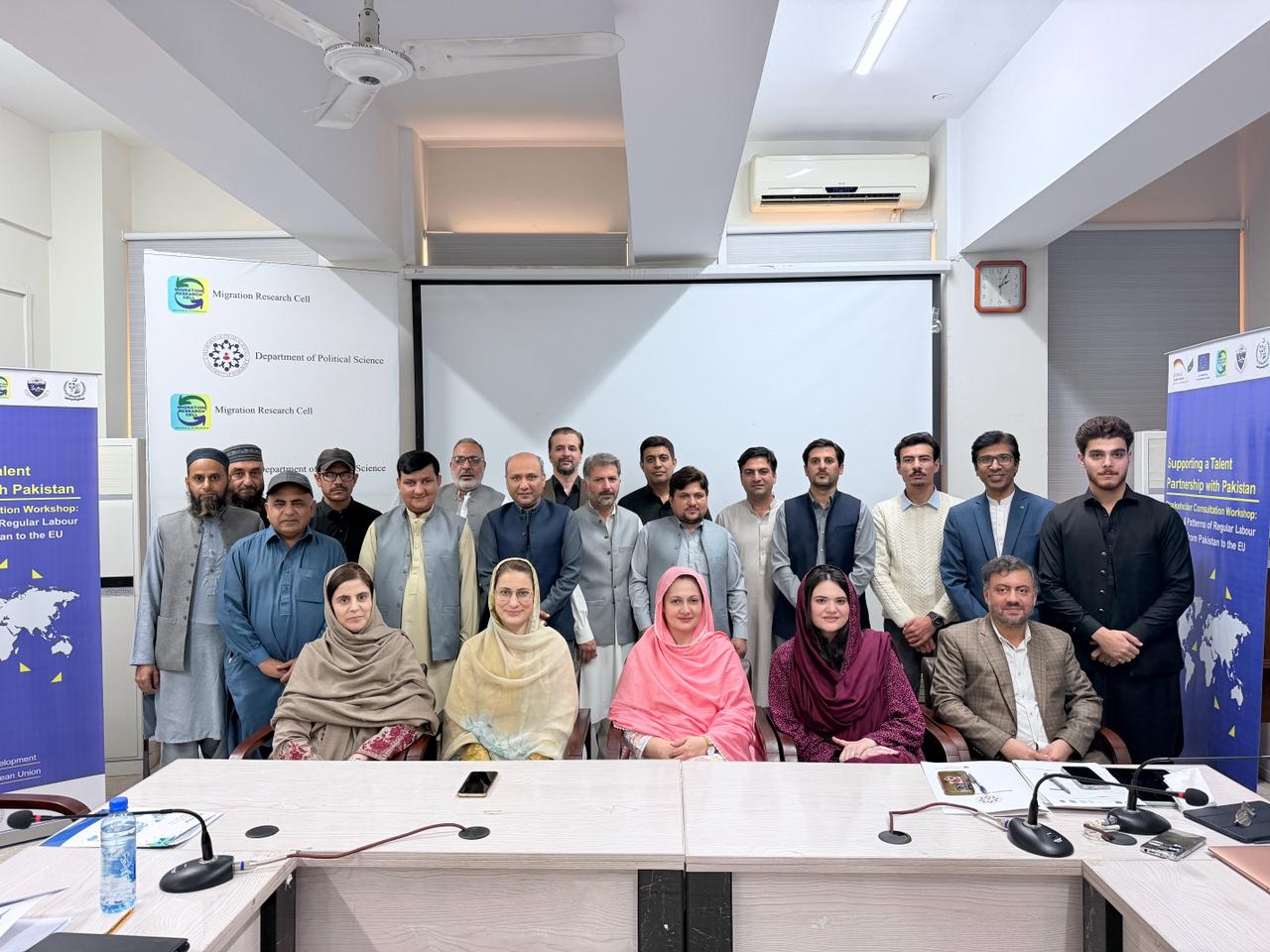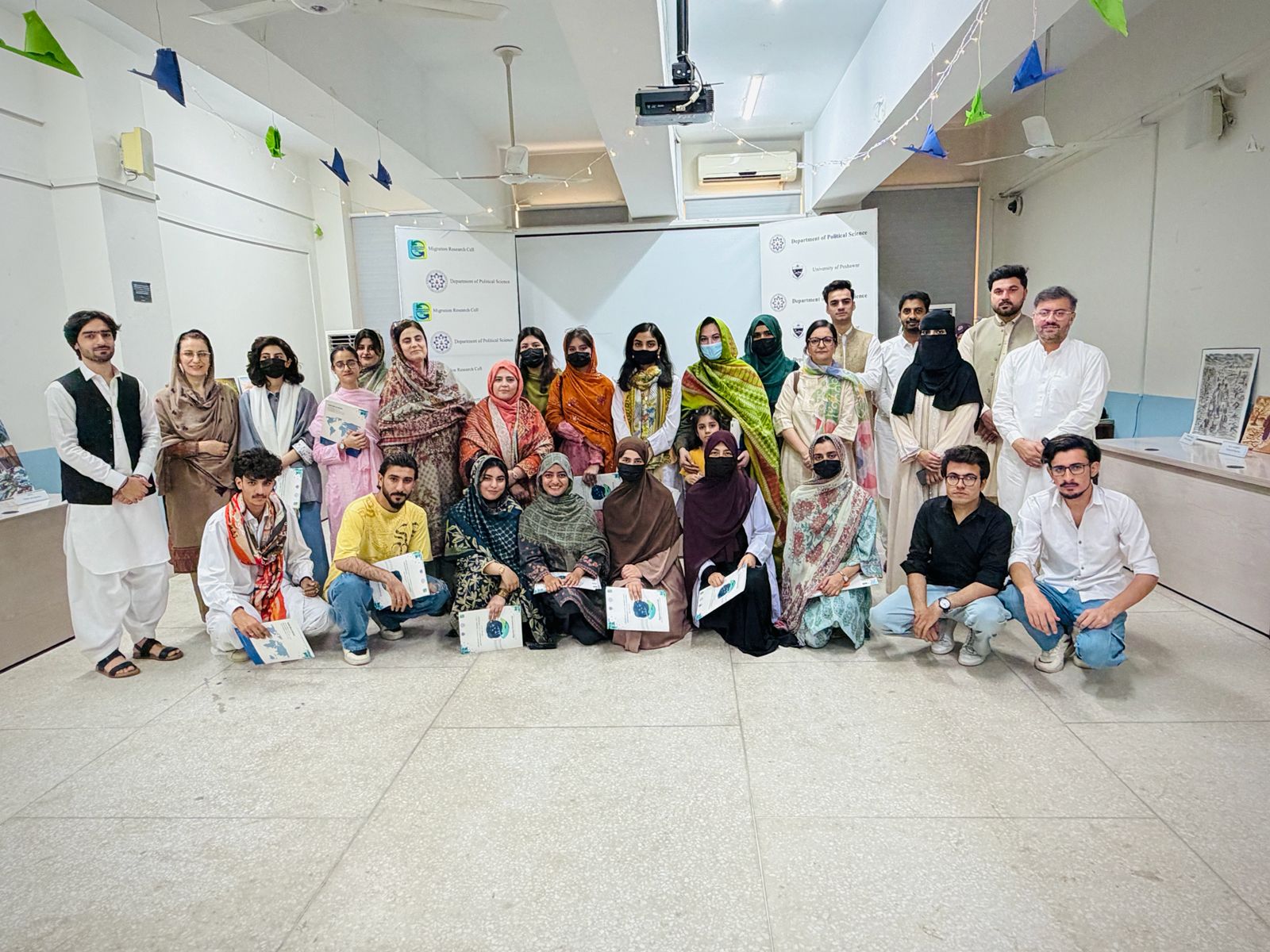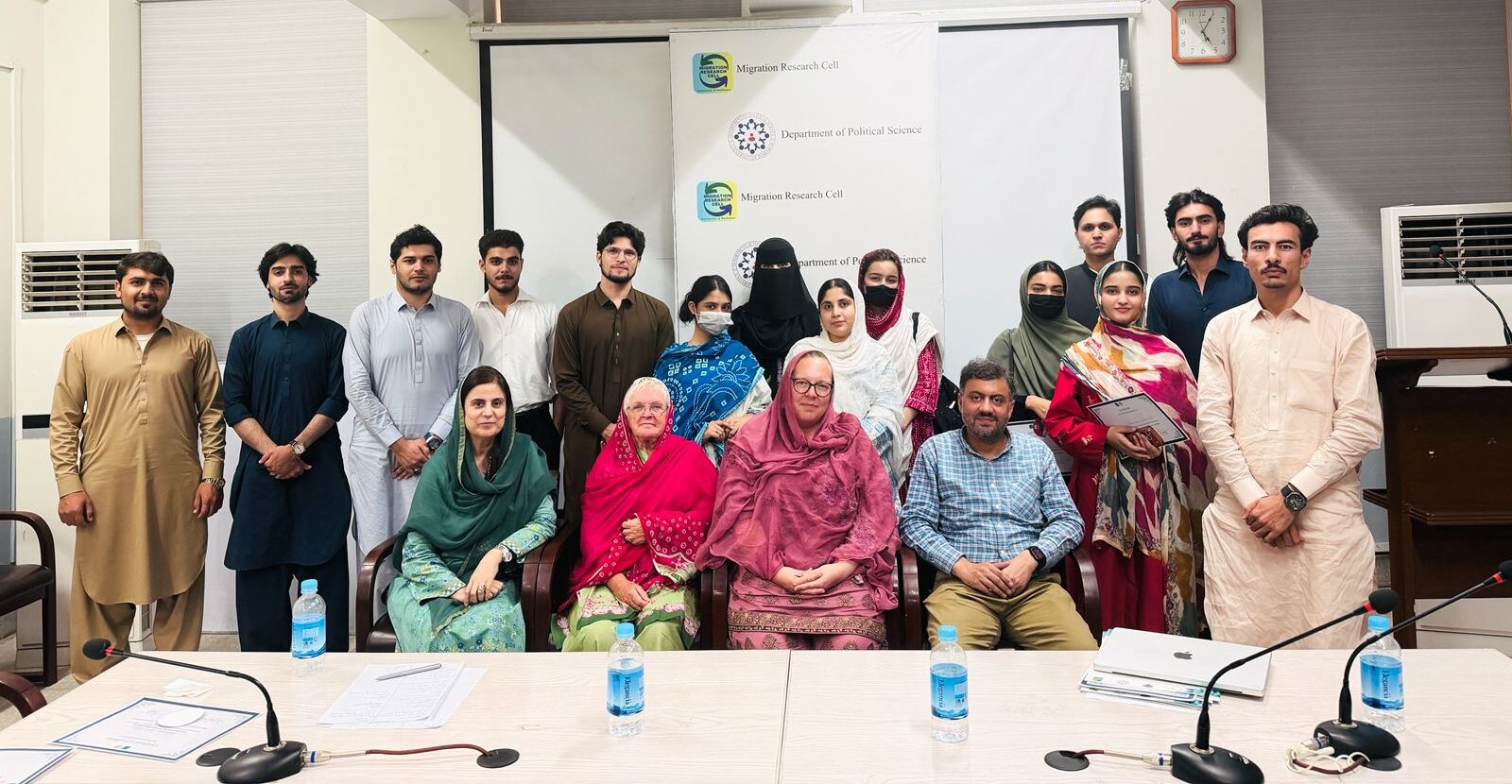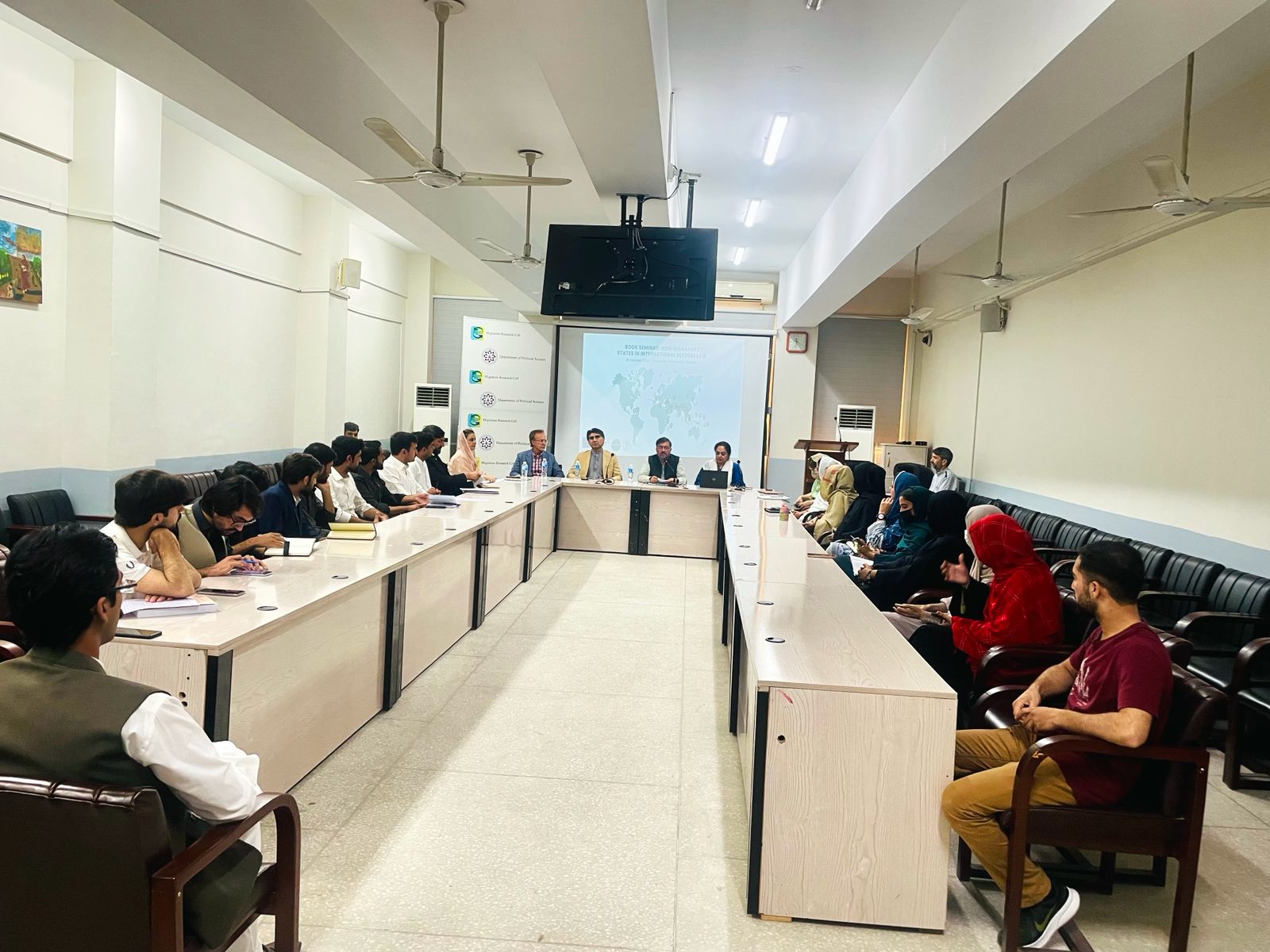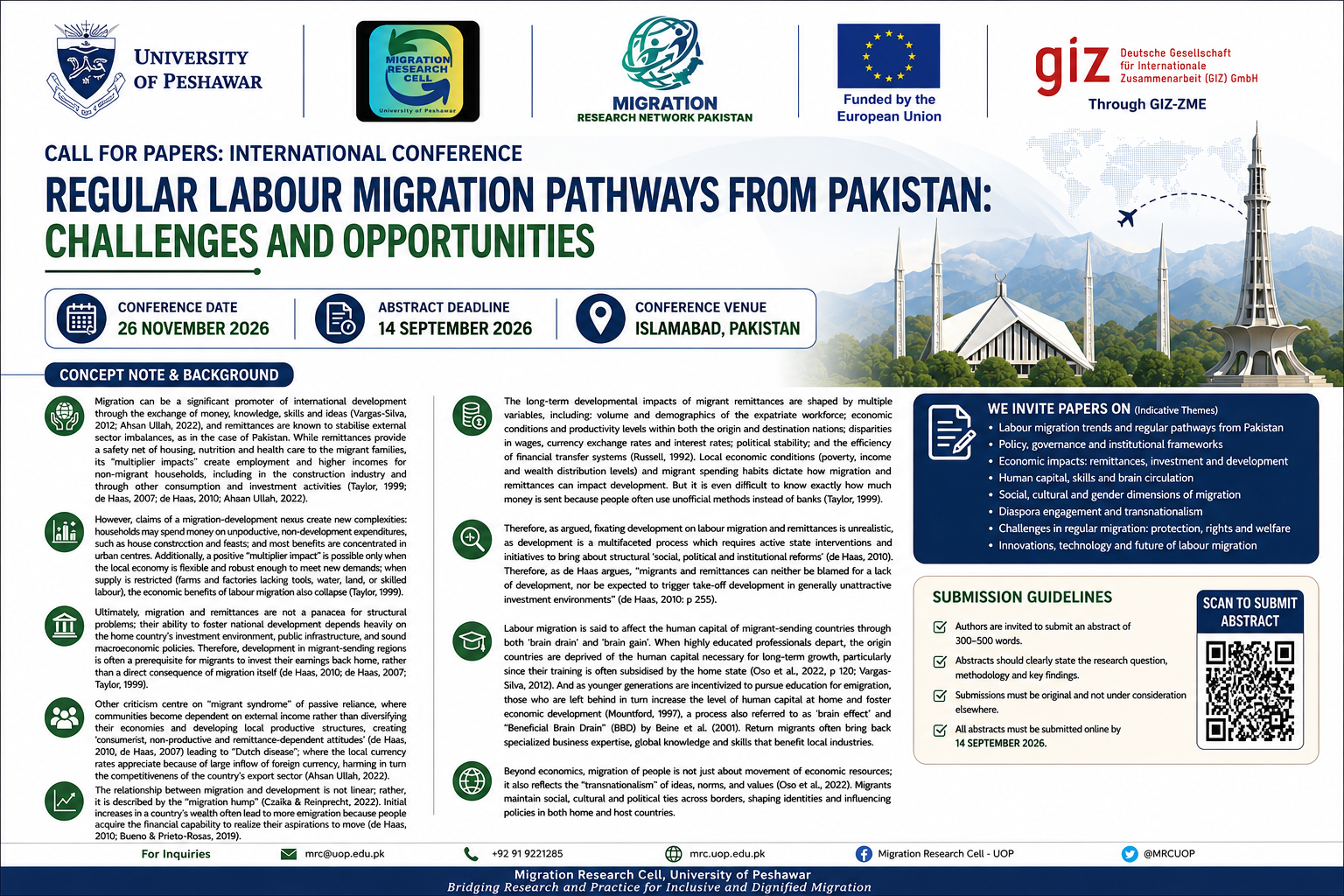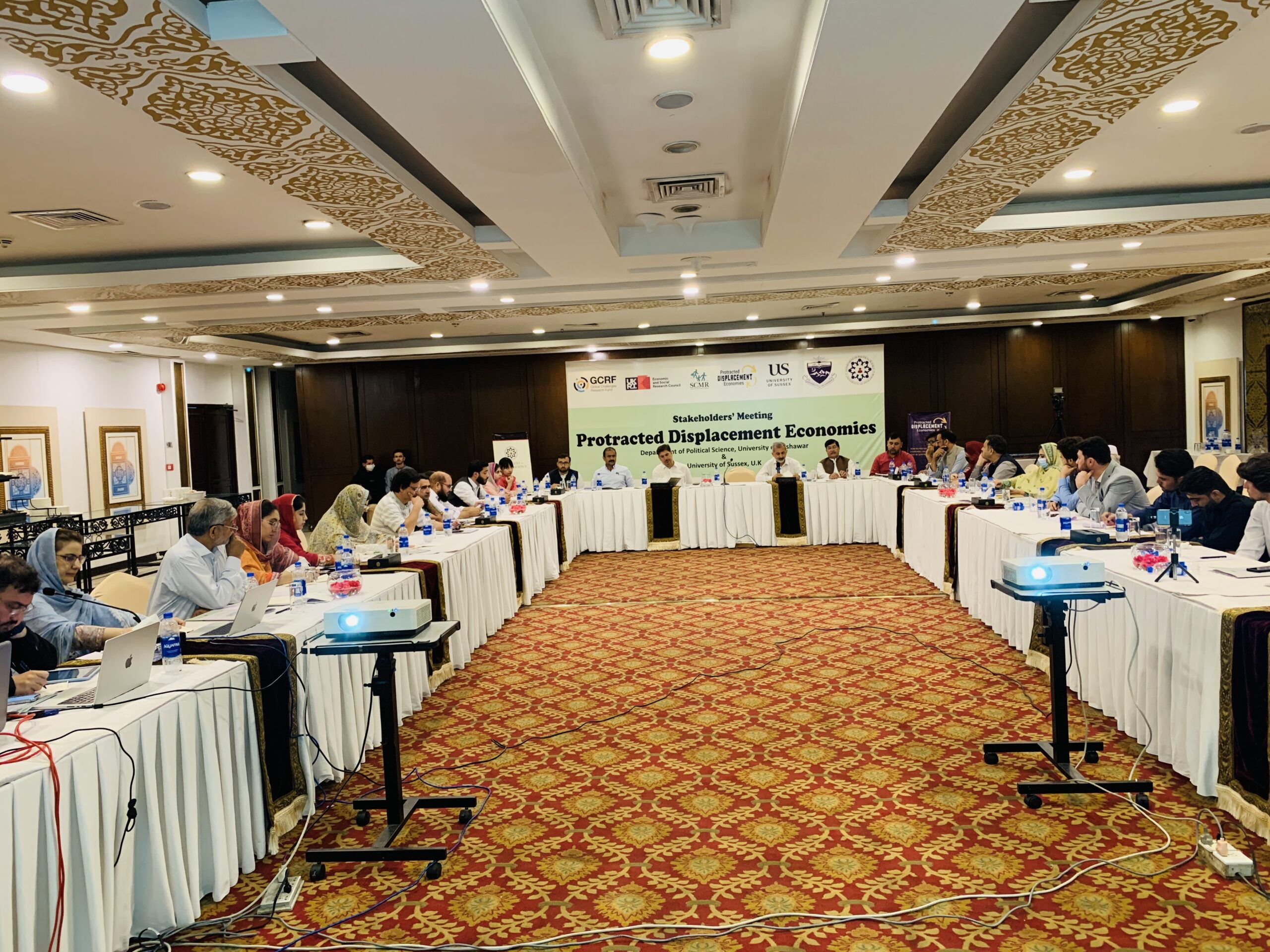
The Migration Research Cell (MRC), Department of Political Science, University of Peshawar, in collaboration with GIZ-ZME/TP Pakistan, organised a one-day Stakeholder Consultation Workshop on 16 November 2026, bringing together academics, policymakers, practitioners, and relevant stakeholders to share the two research studies conducted by MRC and GIZ-ZME/ TP Pakistan under the Evidence for Mobility assignment.
The workshop featured two research studies covering the period 2015–2024:
Study 1: Exploring Trends and Patterns in Regular Labour Migration from Pakistan to Germany, Finland, Greece, Ireland, and Italy, presented by Dr Muhammad Ayub Jan, Head of the Migration Research Cell.
Study 2: Exploring Comparative Trends of South Asian Labour Migration to the EU27, presented by Dr Shagufta Aman, Migration Research Cell.
The programme opened with remarks and an event overview by Professor Dr Shahida Aman. She highlighted MRC’s contributions to migration research and institutional collaborations, noting that its Evidence for Mobility (E4M) initiative with GIZ-ZME/ TP Pakistan generates evidence on regular labour migration from Pakistan to Europe. She stressed inclusive research, stronger partnerships and stakeholder engagement to turn findings into practical policy recommendations.
Dr Irfan, GIZ Pakistan’s technical adviser, outlined the E4M assignment and event objectives, introducing GIZ-ZME/TP Pakistan. He said the Centre of Migration’s partnership with Pakistan’s government aims to reduce irregular migration by raising awareness of legal labour routes, strengthening university career counselling and TEVTA institutions, and improving access to recognised language certification and information on jobs and apprenticeships in Germany and other EU countries. He also highlighted research and stakeholder engagement to develop practical policies linking Pakistan’s skilled workforce with European labour-market needs.
Professor Dr Anwar Alam, Dean of the Faculty of Social Sciences, described migration as an increasingly important feature of globalisation, driven by the pursuit of livelihoods, a better future and security. He urged universities and institutions to equip young people with relevant skills and promote safe, regular migration. He also called for better use of human and natural resources, action on youth unemployment, and evidence-based policies that protect migrants and support sustainable development.
🇵🇰➡️🇪🇺 Study 1: Regular labour migration from Pakistan to Germany, Finland, Greece, Ireland and Italy
🎤 Presented by Dr Muhammad Ayub Jan, Head of the Migration Research Cell. The study analyses Eurostat datasets and shows the following trends.
📊 Employment-related permits issued to Pakistanis by the five selected EU member states increased between 2015 and 2024, with the rise especially visible since 2021.
🌍 Europe is split in two. Germany, Finland and Ireland attract highly skilled talent through Blue Cards and researcher permits, while Italy and Greece rely on quota-driven seasonal and general labour.
⚖️ The gender gap is stark: in Greece, men outnumber women substantially, and Italy, Finland and Greece rarely issue standard professional permits to women.
🎯 Germany stands out as the only viable professional pathway for Pakistani women in Europe, granting women nearly all EU Blue Cards.
🌏➡️🇪🇺 Study 2: Comparative trends of South Asian labour migration to the EU27
🎤 Presented by Dr Shagufta Aman, Migration Research Cell. The study analyses Eurostat datasets and shows the following trends.
📊 South Asian labour migration to EU member states underwent a major structural shift between 2015 and 2024. Employment permits for the region increased over this period, driven largely by medium-skilled workers.
🌍 Labour flows are shifting away from traditional Western and Mediterranean hubs towards Central and Eastern Europe, with Croatia and Romania emerging as key destinations.
🎯 High-skilled routes, such as the EU Blue Card and research permits, have increased in absolute numbers but account for a shrinking share overall, while seasonal work routes have nearly collapsed since COVID.
⚖️ Migration remains overwhelmingly male-dominated, with a persistent gender gap in professional sectors.
The panel discussion, headed by Dr Shahida Aman and Dr Israr Ahmad, focused on the gap between Pakistan’s overall migration patterns and opportunities for regular skilled labour migration to European Union member states. Participants particularly shared their thoughts on labour migration challenges from Khyber Pakhtunkhwa to EU member states. The discussion emphasised four key thematic areas: Governance and Regulatory Frameworks: Identifying policy gaps and improving regular labour migration pathways. Skills, Training and Certification: Aligning workforce skills with European labour market demands while addressing domestic skill shortages. Recruitment, Employers and the Private Sector: Strengthening recruitment practices and public-private sector engagement.Inclusive Labour Migration: Promoting equitable migration opportunities for women, youth, and persons with disabilities.
The session concluded with Dr Irfan acknowledging and validating stakeholders’ valuable input, recommendations, and proposed priority actions, while outlining the next steps for the E4M initiative. On behalf of MRC and GIZ-ZME/TP Pakistan, Dr Muhammad Ayub Jan thanked all stakeholders for their contributions and participation. He encouraged participants to continue visiting the MRC website, mrc.uop.edu.pk, to access these and many other studies conducted under the Evidence for Mobility assignment.