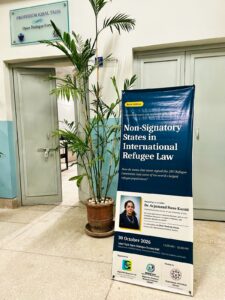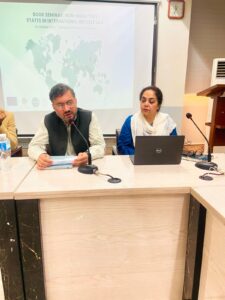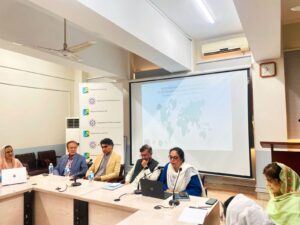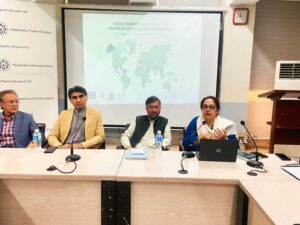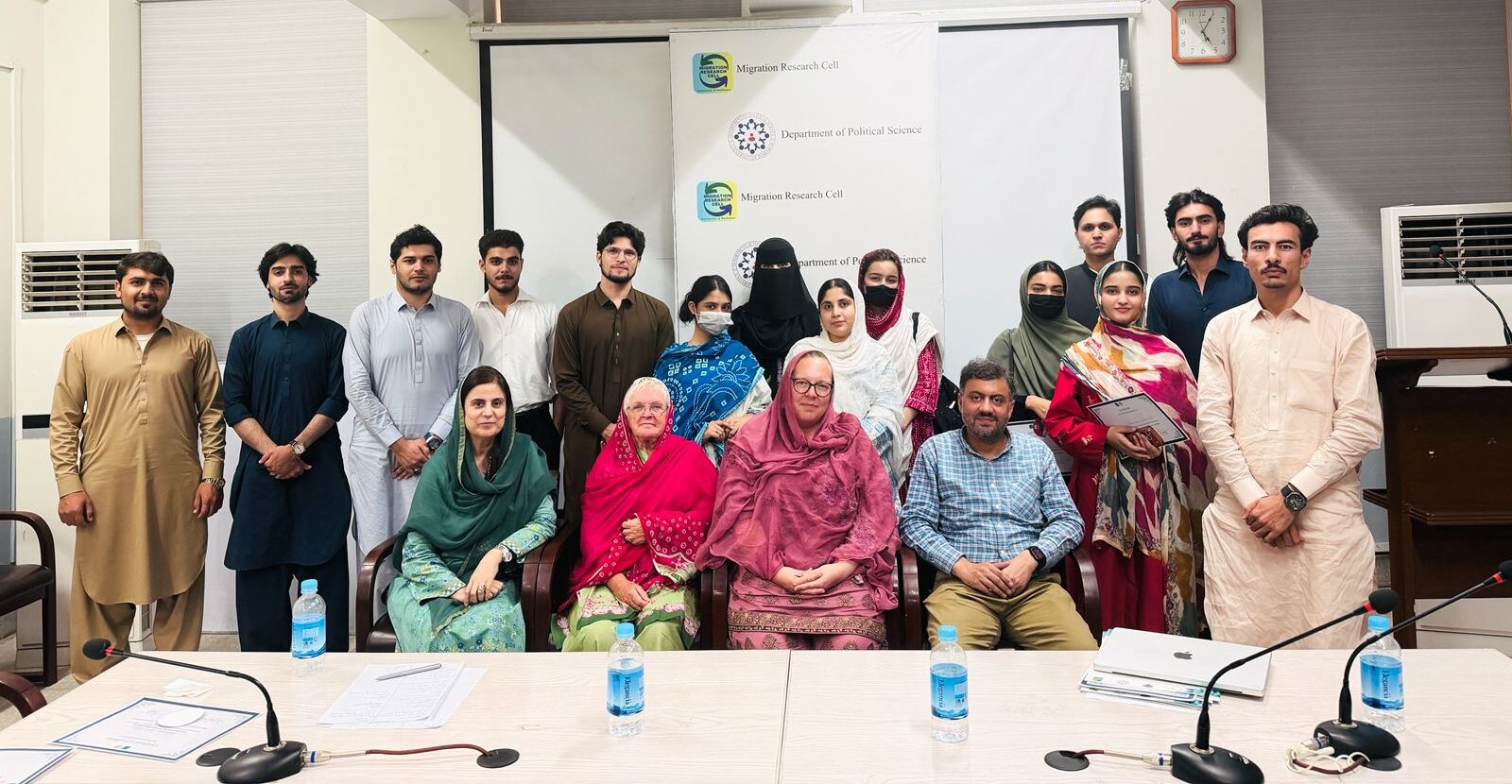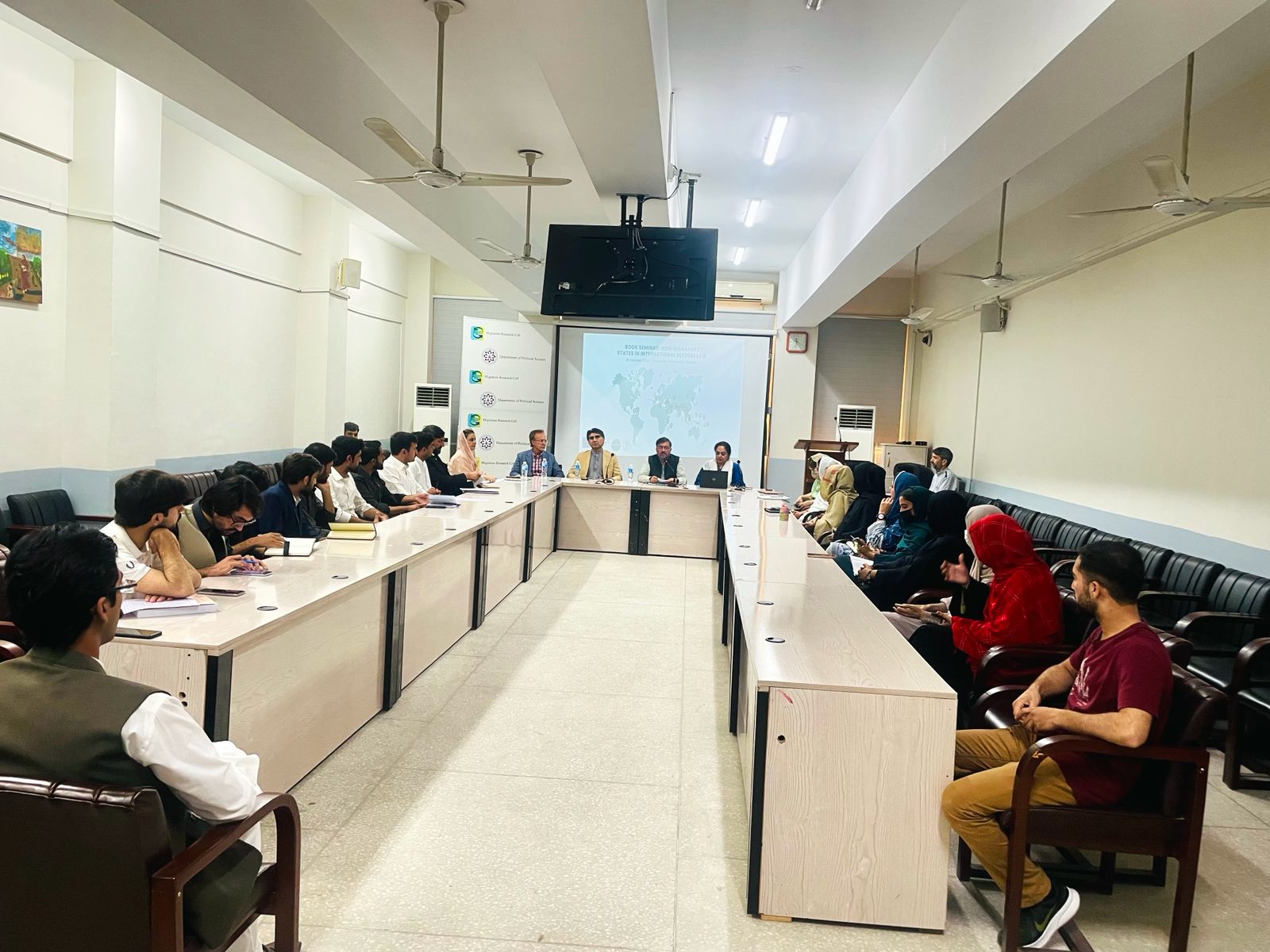

Last Friday, the Migration Research Cell hosted a thought-provoking seminar on Non-Signatory States in International Refugee Law (Brill, 2025), organised by the Migration Research Cell, Department of Political Science, University of Peshawar, and Migration Research Network Pakistan (MRNP).
Co-editor Dr. Arjumand Bano Kazmi (Visiting Researcher, Faculty of Law, University of Oslo) opened with a presentation on how 46 states, including Pakistan, have not signed the international refugee conventions yet still manage large displaced populations. Without dedicated refugee legislation, many rely on colonial-era foreigner laws, and in Pakistan’s case, the Foreigners Act of 1946, which treats undocumented arrivals as ordinary foreigners subject to detention and deportation.
Her key message: a weak and precarious status is not a legal vacuum. Protection in non-signatory states operates through a wider legal matrix, including customary norms such as non-refoulement, ratified human rights treaties, constitutional rights, judicial precedent, Islamic principles of refuge, and MoUs with UNHCR, all of which Pakistani courts have drawn on in refugee-related cases.
The discussion that followed, with Prof. Dr Shahida Aman (Political Science), Dr Faiz Ullah Jan (Journalism and Mass Communication) and Dr Irfan Ashraf (Journalism and Mass Communication), pointed to the case of Pakistan by broadening the lens to colonial endurance, community dynamics, state power, and geostrategic interests.
The discussants noted that shifting geostrategic circumstances, state-backed public discourse moving from religious to ethnic solidarity, and current narratives framing refugees as a security concern and economic burden have shaped how Afghan refugees are perceived and treated in Pakistan.
The takeaway: The common thread was that law does not operate in isolation from politics. Where no refugee-specific law exists, the framework governing displaced people is shaped by colonial legacies, political interests and shifting public narratives, and, in turn, shapes them. Understanding refugee protection in Pakistan requires looking at all three together.
Thank you to our speaker, discussants, students and faculty for such a rich conversation.